



How do you find your clothing size online?
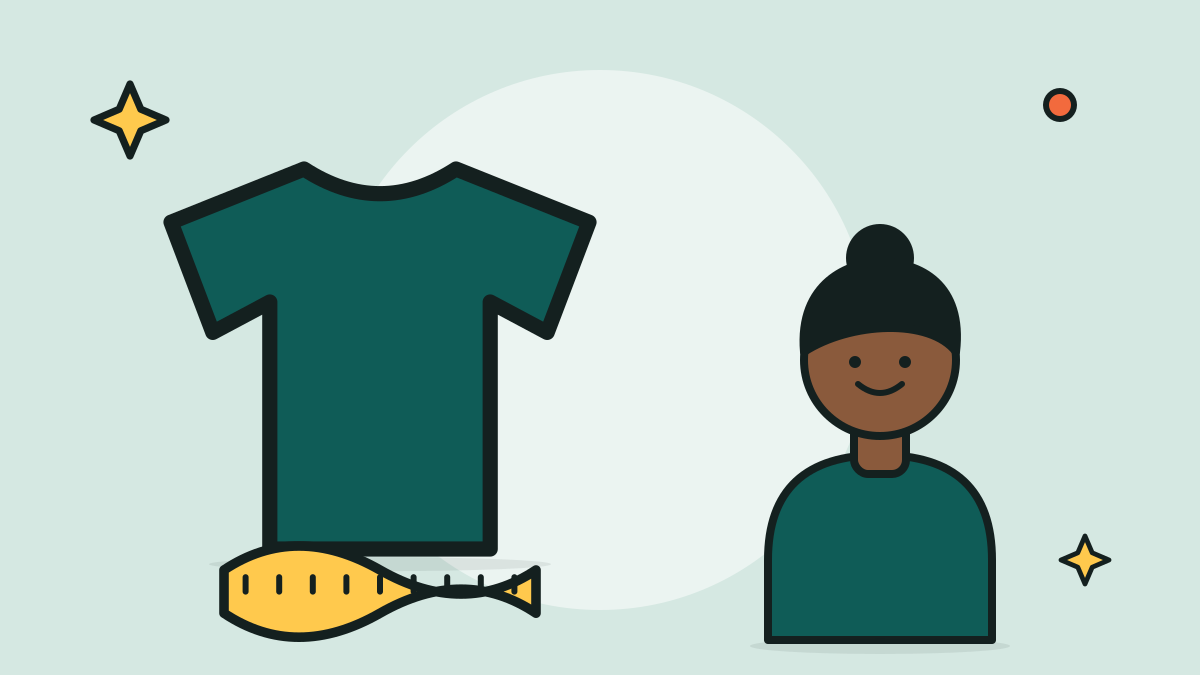
To find your clothing size online, measure your body with a soft tape and match those numbers to the size chart of the exact brand and item you want. Do not trust the size label on clothes you already own, because brands label sizes in different ways.
That is the whole method. The rest of this guide shows you how to do each part well. You will learn what to measure, how to read a chart, what to do when you fall between sizes, and which costs to check before you pay. Here is the short version:
- Measure your body, not your clothes.
- Write the numbers down in one place.
- Open the size chart for the specific brand and product.
- Check whether the chart shows body size or garment size.
- Read the fit notes and recent customer comments.
- Check the return rules and the cost of sending an item back.
Most sizing errors happen at step 3 or step 6. People use a chart from a different brand, or they skip the return policy. Both mistakes are easy to avoid.
What do you need to measure, and how?
You need a flexible tape measure, such as a sewing tape. A metal builder's tape will not bend around your body. If you have no tape, use a piece of string and then hold it against a ruler. Stand relaxed and wear thin clothes or underwear. Keep the tape snug, not tight. You should be able to slide one finger under it.
Here are the main measurements and how to take them:
- Chest or bust: Measure around the fullest part of your chest. Keep the tape level across your back.
- Waist: Measure around your natural waist. This is the narrowest part of your torso, usually just above the belly button. Bend sideways once to find the crease.
- Hips: Measure around the fullest part of your hips and seat. Keep your feet together.
- Inseam: Measure from the top of your inner thigh to your ankle bone. It is easier if you measure a pair of trousers that already fit you, from the crotch seam to the hem.
- Shoulder width: Measure across your back from one shoulder edge to the other. A friend can help with this one.
- Sleeve length: Start at the centre back of your neck. Run the tape over your shoulder and down to your wrist, with your arm slightly bent.
- Height: Many charts use height for tops, dresses and coats. Measure without shoes.
Take each measurement twice. If the two numbers differ, take a third and use the one that appears twice. Record them in both centimetres and inches. Many size charts use one unit only, and you do not want to do maths at checkout.
Tip: Measure at the same time of day. Bodies change a little through the day, and a measurement taken after a big meal can be slightly larger than one taken in the morning. Small differences matter most for fitted clothes.
How do you read a size chart correctly?
A size chart is a table that links a size label, such as S, M, L, 10 or 42, to a range of measurements. Before you read any numbers, find out what the numbers describe. This is the step most shoppers skip.
There are two kinds of chart:
- Body measurements: The chart tells you which body size each label is made for. You compare your own numbers directly.
- Garment measurements: The chart shows the size of the item itself, laid flat. You compare the item with a similar garment you own and like. If a chart does not say which type it is, look for words like "body," "garment," "flat" or "finished."
Garment measurements are often given flat, so the chest might be measured straight across. A flat chest width of 55 cm would mean about 110 cm all the way around. If the chart does not explain this, check a garment of your own the same way before you decide.
Worked example (numbers are illustrative only): Say your waist is 84 cm and your hips are 101 cm. The brand chart shows this:
- Size M: waist 78 to 83 cm, hips 98 to 103 cm
- Size L: waist 84 to 89 cm, hips 104 to 109 cm
Your waist fits L and your hips fit M. You are between sizes. What you do next depends on the item and fabric. For a stretchy skirt, M may be fine. For rigid denim, L is safer, because a waistband that is too tight is harder to fix than a hip that is a little loose. A tailor can take in a waist more easily than let one out. Always size for the larger measurement when the fabric has no stretch.
Why does your size change from brand to brand?
There is no single global standard for clothing sizes. Each brand builds its own sizes from its own fit models and its own idea of a typical customer. That is why you can be a small in one shop and a large in another. This is normal and it does not mean your body has changed.
Common reasons for the differences:
- Regional systems: The US, UK, EU and many Asian markets use different number systems. A label that looks familiar may not mean what you expect. Conversion tables found online are approximate, so use the brand's own chart where you can.
- Vanity sizing: Some brands label clothes with a smaller number than the measurements suggest. Only the chart tells you the truth.
- Cut and style: Slim, regular, relaxed and oversized cuts of the same size fit very differently.
- Fabric: Stretch knit, linen, stiff denim and silk all behave differently. Some fabrics shrink in the first wash.
- Where it is made: Different factories and different target markets can lead to slightly different patterns.
The practical lesson is simple. Treat your measurements as your fixed data. Treat the size label as a code that must be translated again for each brand. Keep a note on your phone with your numbers and the sizes that worked in each shop. After a few orders you will have your own personal chart.
How do you find your shoe size online?
Shoe sizing follows the same logic as clothing. Measure your foot, then check the brand's own chart. Do not simply copy the size from your old shoes, because shoe shapes, materials and sizing systems vary.
- Measure in the evening, when feet are at their largest.
- Stand on a sheet of paper against a wall, with your heel touching the wall.
- Mark the tip of your longest toe. Use a pen held straight up, not at an angle.
- Measure from the wall to the mark in centimetres or millimetres.
- Repeat for both feet. Use the longer measurement.
- Measure the widest part of your foot too, if the brand offers width options.
- Compare the length to the brand's chart. Check whether it asks you to add extra room.
Many brands suggest sizing up if you are between sizes, or if you wear thick socks. Read the product notes for words like "runs small," "runs large" or "true to size." Narrow styles, pointed toes and boots often fit differently from trainers.
If you are also looking for savings on footwear, there are some offers listed at the time of writing. These facts were true on 2026-11-06 and may have changed, so check the store before you rely on them:
- Bruno Marc: A listing for 20% off sitewide with the code GREEN20. The listing shows an end date of 1 September 2030. The same listing also names Dream Pairs, Nortiv 8 and Allswift Shoes, so check which store the code works on.
- Fidelity Store: A listing for shoes and trainers with up to 70% off, plus an extra 20% with the code FIDELITY20. No end date is shown.
Do not let a discount decide your size. A cheaper pair that does not fit is not a saving. Choose the size first, then apply any code at checkout and check whether the discount changes the return rules.
What hidden costs and mistakes should you watch for?
The size is only half the question. The other half is what happens if you get it wrong. Check these points before you pay.
- Return shipping: Some shops give free returns. Others charge a fee, or ask you to pay the carrier yourself.
- Refund or credit: Some shops refund to your card. Others give store credit only, which is less useful if the brand does not suit you.
- Final sale items: Heavily reduced items are sometimes not returnable. This matters when a code is used on sale stock.
- Import duties and taxes: If you order from another country, you may pay customs charges on arrival. A return across borders can be slow and costly.
- Time limits: Return windows can be short. Check when the clock starts, at purchase or at delivery.
- Condition rules: Items usually must be unworn with tags attached. Some shops do not accept shoes that have been worn outdoors.
- Code exclusions: Discount codes may exclude some brands or items. Read the terms before you count on the saving.
Worked example (numbers are illustrative only): You buy a jacket listed at 100. A 20% code brings it to 80. It does not fit. The shop charges 10 for return shipping and refunds only the item price. You get 80 back and lose 10. If the shop would also have refunded only the discounted amount, you cannot get back the full 100 either. So the true cost of one wrong guess is the return fee, plus your time, plus the loss of the chance to buy it at the original price if stock runs out.
Now compare ordering two sizes. If returns are free, buying two sizes and returning one costs you only time, though you may be charged temporarily for both. If returns cost 10, that one extra order costs you about the same as a wrong guess. Only order two sizes when returns are free and the refund is quick.
The most common mistakes are these:
- Using the chart from a different brand or a different product line.
- Measuring over thick clothes.
- Pulling the tape too tight.
- Choosing by label instead of by measurements.
- Ignoring fabric and fit notes.
- Forgetting that the same shop can use different charts for men, women, kids and shoes.
When does this advice not apply?
Measuring and chart matching work well for most basic clothes. There are cases where they work less well, and it is better to know in advance.
- Tailored and structured pieces: Suits, blazers, formal shirts and fitted coats depend on shoulders, arm length and posture, not only on chest or waist. For these, a try on in person or a tailor may be worth the effort.
- Very stretchy items: Leggings, socks and some knitwear forgive a lot. Here the label and the brand note often matter more than precise numbers.
- Children's clothes: Children grow fast. Use height and age ranges as a guide, and allow some room. Check the chart again for each purchase.
- Secondhand and vintage: Old size labels do not match modern ones. Ask the seller for actual flat measurements and compare them with a garment you own.
- Bodies that change: During pregnancy, weight change, or recovery from surgery, your measurements may shift. Measure again before each order.
- Special needs and adaptive clothing: If you need clothes for mobility, medical devices or support, look for brands that give specific fit details, and contact customer service before you buy.
- Underwear and swimwear: These need more precise fit than most clothes. Use the brand's own fitting guide, and check the hygiene rules for returns. Many shops do not take them back.
The method also fails when a chart is missing or clearly wrong. If a listing has no size information, treat that as a warning. Ask the seller, or choose another listing.
How do you decide between two sizes before you buy?
When your numbers sit between sizes, use a short checklist. It takes a few minutes and often settles the question.
- Check the fit note. Does the product page say slim, regular or relaxed? A relaxed cut allows you to size down. A slim cut often means size up.
- Check the fabric. A label with elastane or stretch gives room. Pure cotton, linen or denim does not.
- Compare with a garment you own. Lay your best fitting item flat and measure it. Compare it with the chart.
- Read recent customer comments. Look for repeated remarks about the fit, not just one person's opinion. If several say "runs small," believe them. Be careful of reviews that look the same or give no details.
- Look at the model details. If the page says the model is a certain height and wears a certain size, compare that with your own height.
- Think about how you will wear it. Will you layer a jumper under it? Do you want it loose or neat? That choice can move you up or down a size.
- Check the return rules. If returns are easy, take the size that best matches your widest important measurement. If returns are costly, be more careful and ask the shop.
Many shops have a chat tool or an email address for sizing questions. Send your measurements and the item name. Keep the reply, in case the size turns out wrong. A written answer can help in a dispute.
After the order arrives, try it on straight away. Do it indoors, on a clean floor, and keep the tags on. Sit, bend and raise your arms. If it is wrong, start the return the same day. Then note what happened in your sizing record, so the next order is easier.
FAQ: Finding your clothing size online
What is the most accurate way to find your size when shopping online?
The most accurate way is to measure your body and compare the numbers with the brand's own size chart for that item. Add the fit notes and recent customer comments to confirm your choice. Your old labels are the least reliable guide.
Should you size up or down if you are between sizes?
It depends on the fabric and the cut. For stretch fabrics and relaxed styles, the smaller size often works. For stiff fabrics, fitted items and shoes, the larger size is usually safer, because it is easier to take in a garment than to let it out.
Are online size calculators and fit tools reliable?
They can help, but treat them as a second opinion. Their results depend on the numbers you enter and on the brand data behind them. Compare the result with the size chart and the fit notes before you order.
How do you measure yourself without a tape measure?
Use a piece of string, a phone charging cable or a strip of paper. Wrap it around the body part, mark the point where it meets, then lay it flat against a ruler. It is less convenient than a tape, but it gives a good measurement.
Do US, UK and EU sizes convert exactly?
No. Conversion tables are only approximate, and brands do not always follow them. Use the brand's own chart and your body measurements instead. If the chart gives only one system, ask the shop before buying.
Can you return clothes that do not fit?
Often yes, but the rules vary by shop. Check the time limit, the condition rules, who pays for return shipping, and whether you get a refund or store credit. Sale items and some product types may be excluded.
Disclosure: DealPortal may earn a commission when you use a link on this page, at no extra cost to you.